
In 2026, business automation is no longer about saving time. It is about building autonomous intelligence inside organizations.
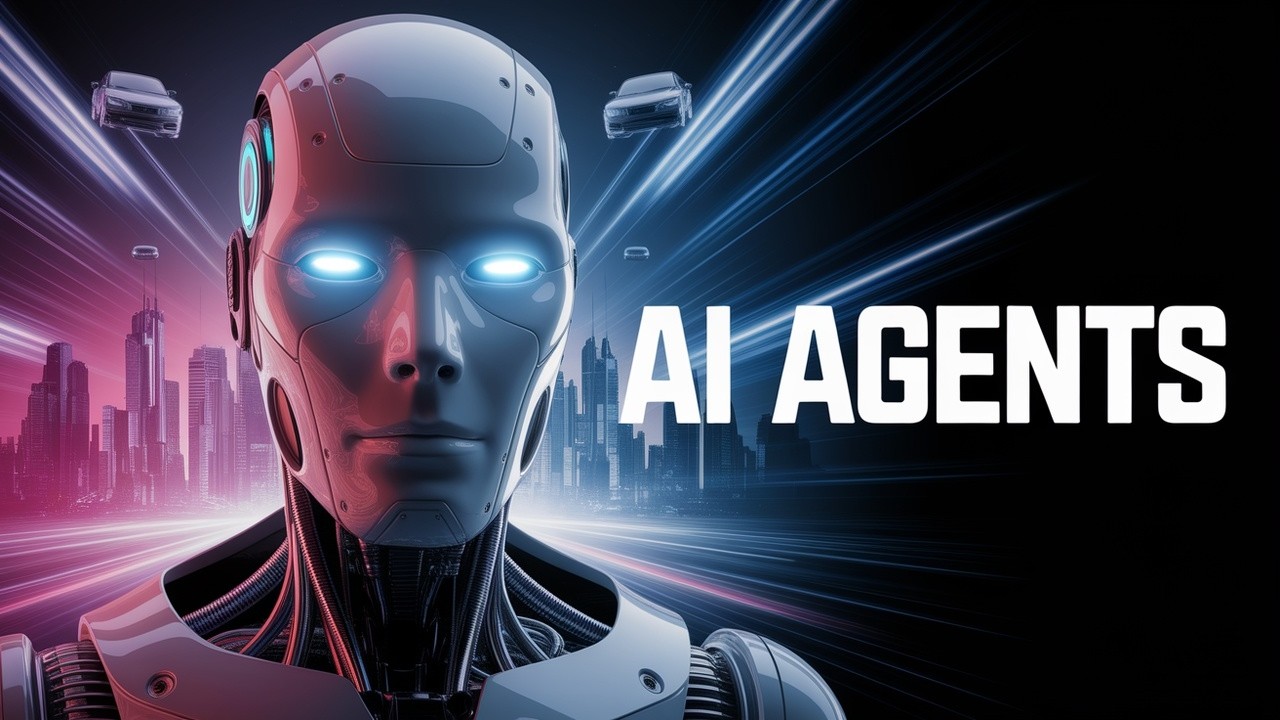
Companies are moving beyond static workflows, rule-based systems, and traditional chatbots. The spotlight has shifted to AI agents—self-directed, goal-oriented systems capable of thinking, planning, executing, and improving with minimal human input.
This shift is redefining how businesses market, sell, support customers, manage operations, and scale globally. AI agents business automation in 2026 is not a trend anymore—it is becoming the new operating system of modern enterprises.
This guide explores how AI agents are revolutionizing business automation, the most impactful AI agent automation use cases, emerging AI automation trends for 2026, and how businesses can design long-term AI agent digital transformation strategies.
The Rise of AI Agents: Why 2026 Is a Turning Point
The early 2020s focused on automation.
The mid-2020s focused on intelligence.
2026 is about autonomy.
AI agents combine:
- Large language models
- Decision-making logic
- Tool and API usage
- Long-term memory
- Goal-driven execution
Unlike traditional automation tools, AI agents do not simply respond—they act.
Modern businesses operate in:
- Multi-channel ecosystems
- High customer-expectation environments
- Real-time data pipelines
- Intense global competition
Manual workflows and legacy automation cannot keep up. That is why AI agents transforming workflows has become a core priority for enterprises in 2026.
AI Agents vs Traditional Chatbots: A Fundamental Shift
Many organizations still confuse AI agents with chatbots. In 2026, that misunderstanding is expensive.
Traditional Chatbots: Reactive and Limited
Traditional chatbots:
- Follow predefined scripts
- Respond only when prompted
- Cannot reason or plan
- Break outside training scenarios
- Require constant manual updates
They are tools—not decision-makers.
AI Agents: Proactive and Autonomous
AI agents:
- Understand goals, not just queries
- Make independent decisions
- Execute multi-step workflows
- Learn from outcomes
- Use tools, APIs, CRMs, and databases
- Collaborate with other agents
Simply put:
Chatbots talk. AI agents work.
This distinction explains why AI agents for enterprise automation are replacing conversational AI as the backbone of business systems.
What Makes AI Agents Truly Agentic?
Agentic AI is defined by behavior, not just intelligence.
Goal Awareness
AI agents operate with objectives such as:
- Increasing lead conversion
- Reducing churn
- Optimizing ad spend
- Improving response times
They do not wait for instructions—they pursue outcomes.
Planning and Reasoning
AI agents can:
- Break goals into executable steps
- Choose optimal strategies
- Adjust plans mid-execution
This enables dynamic automation instead of rigid workflows.
Tool Integration
AI agents connect directly with:
- CRMs and ERPs
- Email and messaging platforms
- Analytics dashboards
- Ad managers
- Payment systems
This makes them operational, not just conversational.
Memory and Learning
AI agents retain:
- Customer preferences
- Interaction history
- Campaign performance
- Business rules
Over time, AI agents business efficiency improves continuously without manual reprogramming.
Agentic Marketing: Redefining Growth in 2026
Marketing is one of the fastest-growing areas of AI agent adoption.
From Campaigns to Continuous Intelligence
Traditional marketing follows a loop:
Plan → Execute → Analyze → Repeat
Agentic marketing operates as:
Analyze → Decide → Execute → Optimize → Learn (continuously)
AI agents monitor performance in real time and adapt automatically.
AI Agents in Lead Generation
AI agents in sales and operations can:
- Qualify leads autonomously
- Score prospects dynamically
- Personalize outreach at scale
- Follow up intelligently
Static funnels are replaced by adaptive customer journeys.
Hyper-Personalized Customer Experiences
In 2026, personalization is mandatory.
AI agents:
- Adapt messaging based on behavior
- Adjust timing, tone, and channel
- Align offers with real-time intent signals
This is a core reason AI agents are transforming workflows across growth teams.
AI Agent Automation Use Cases Across Industries
AI agents are no longer limited to tech companies. They are being deployed across every sector.
E-Commerce and Retail
AI agents:
- Forecast inventory demand
- Automate customer support end-to-end
- Recover abandoned carts
- Personalize recommendations
Result: Higher revenue with lower operational costs.
Healthcare
AI agents support:
- Patient onboarding
- Appointment scheduling
- Medical documentation
- Follow-up care reminders
Efficiency improves while compliance remains intact.
Finance and FinTech
AI agents handle:
- Fraud detection
- Transaction monitoring
- Automated financial advice
- Customer issue resolution
Risk is reduced while trust increases.
Real Estate
AI agents:
- Qualify buyers and sellers
- Recommend properties
- Schedule viewings
- Manage follow-ups
Workflows shift from reactive to predictive.
Education and EdTech
AI agents:
- Personalize learning paths
- Automate student support
- Track engagement
- Assist educators
Education becomes adaptive, not standardized.
Conversational AI Evolves into Operational Intelligence
In 2026, conversational AI is no longer about chat.
AI agents:
- Understand business context
- Trigger backend workflows
- Coordinate across systems
- Resolve issues autonomously
This evolution transforms conversations into actions.
Measuring ROI of AI Agents in 2026
Return on investment is no longer measured only by cost savings.
Key ROI Metrics
- Reduced manual workload
- Faster decision cycles
- Higher conversion rates
- Improved customer satisfaction
- Lower churn
- Increased lifetime value
Operational ROI
- 24/7 availability
- Zero burnout
- Infinite scalability
- Consistent performance
One AI agent can replace multiple siloed tools.
Strategic ROI
AI agents free human teams to:
- Focus on creativity
- Build relationships
- Make high-level decisions
This is where AI agent digital transformation strategies create lasting competitive advantage.
Why Businesses Without AI Agents Will Struggle
By 2026, businesses relying only on:
- Manual processes
- Traditional chatbots
- Static automation
Will face:
- Slower response times
- Higher costs
- Lower customer satisfaction
- Limited scalability
AI agents are becoming table stakes, not premium tools.
The Future: Multi-Agent Business Systems
The next phase of AI automation trends in 2026 is collaboration.
Examples include:
- Marketing agents working with sales agents
- Support agents coordinating with billing agents
- Analytics agents guiding strategy agents
This creates AI-powered organizations—not isolated AI tools.
Where Platforms Like Botnest AI Fit In
Platforms such as Botnest AI stand out because they:
- Enable agentic marketing
- Combine conversational AI with automation
- Integrate across business systems
- Scale with enterprise growth
Businesses no longer deploy bots—they deploy intelligent AI agent ecosystems.
Final Thoughts: AI Agents Are the New Workforce
In 2026, the question is not “Should we use AI agents?”
The real question is:
How fast can we integrate them into our core operations?
AI agents are not replacing humans.
They are redefining what humans focus on.
Organizations that adopt AI agents business automation, invest in the best AI automation agents for businesses, and align sales, marketing, and operations around agentic systems will lead their industries.
Those who do not will simply struggle to keep up.



Leave a Reply