
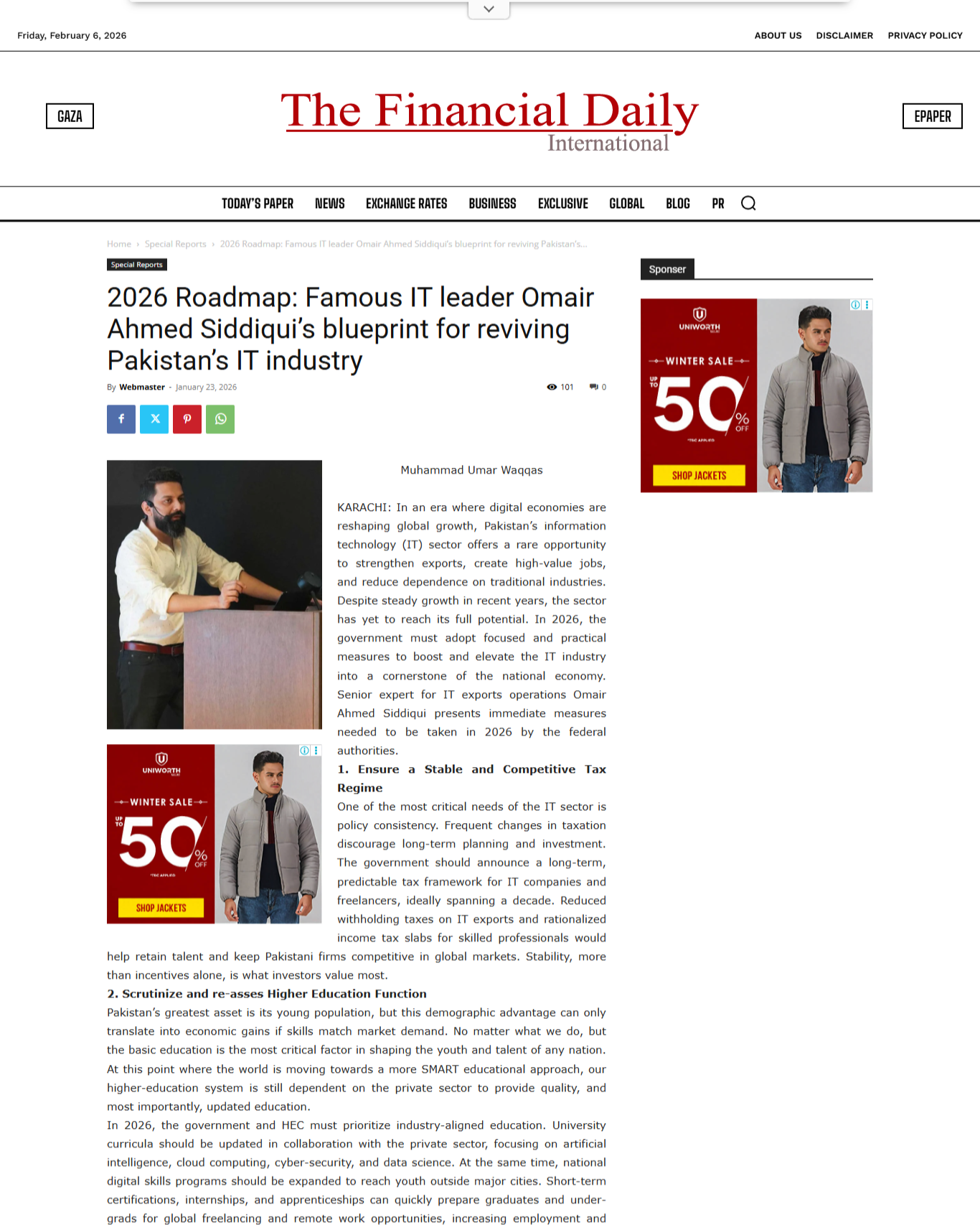
Earlier this week, The Financial Daily published an insightful feature on Omair Ahmed Siddiqui, CEO of Meta Frolic Labs, outlining a bold and forward-looking roadmap for reviving Pakistan’s IT industry by 2026.
The article goes beyond surface-level commentary. It presents a practical blueprint for how Pakistan can reposition itself in the global digital economy — not merely as a low-cost outsourcing destination, but as a serious player in AI-driven product innovation, intelligent automation, and scalable technology ecosystems.
At its core, Omair Ahmed Siddiqui’s vision challenges a long-standing mindset: that Pakistan’s primary value lies in providing technical labor. Instead, he advocates for a future where Pakistan builds its own platforms, exports intellectual property, and leads with innovation.
This blog explores the key highlights of that vision — and what it means for founders, policymakers, enterprises, and the broader tech community.
From Service Economy to Product Economy
For decades, Pakistan’s IT sector has primarily focused on services, including software development, QA, support, and offshore engineering. While this model has created jobs and brought in foreign revenue, it has also capped growth potential.
Siddiqui’s roadmap emphasizes a necessary evolution: moving from execution-based services to value-driven product creation.
A product economy does several critical things:
- It creates long-term recurring revenue instead of one-off project income
- It builds globally recognizable brands
- It generates proprietary technology and intellectual property
- It attracts higher-quality foreign investment
- It fosters innovation cultures instead of delivery factories
This transition requires a shift in how startups are built, how enterprises innovate, and how talent is trained. It also demands stronger collaboration between government bodies and private tech leaders to create policies that reward innovation rather than volume alone.
The AI-First Philosophy: Not Optional, but Foundational
Perhaps the most powerful theme in Siddiqui’s blueprint is the idea of AI-first development.
This doesn’t mean simply adding AI features to existing products. It means designing businesses, workflows, and platforms around artificial intelligence from the start.
An AI-first approach fundamentally changes how companies operate:
- Processes become automated instead of manual
- Decisions become data-driven instead of instinct-based
- Products learn and improve over time
- Customer experiences become personalized and predictive
Rather than treating AI as a future upgrade, Siddiqui positions it as the foundation layer of modern digital products.
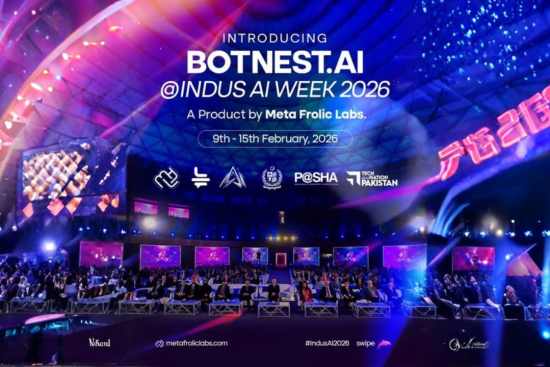
This philosophy aligns with emerging national initiatives like Indus AI Week 2026, which aim to accelerate awareness and adoption of artificial intelligence across Pakistan’s technology landscape.
The message is clear: countries that fail to integrate AI deeply into their digital infrastructure today risk falling permanently behind tomorrow.
Meta Frolic Labs’ Role in Shaping This Direction
As CEO of Meta Frolic Labs, Omair Ahmed Siddiqui isn’t speaking purely from theory. His perspective is grounded in real-world product development, automation frameworks, and enterprise deployments.
Meta Frolic Labs operates at the intersection of:
- AI automation
- intelligent workflow systems
- product engineering
- scalable SaaS architectures
The company’s approach reflects the same principles outlined in the article: building systems that think, learn, and evolve — rather than static applications that require constant human intervention.
This practical experience informs Siddiqui’s broader national outlook. His roadmap isn’t aspirational rhetoric; it’s based on what modern companies already need to compete globally.
By embedding AI into business logic, Meta Frolic Labs demonstrates how Pakistani tech companies can move upstream in value creation — offering strategic solutions rather than just development hours.
Talent Development: The Missing Link in Digital Transformation
No technology strategy succeeds without people.
A major pillar of Omair Ahmed Siddiqui’s vision focuses on workforce transformation. Pakistan produces thousands of IT graduates every year, yet many enter the job market without exposure to AI systems, automation platforms, or product lifecycle thinking.
To close this gap, the roadmap highlights:
- Practical AI education alongside traditional programming
- Exposure to real-world product development environments
- Training in system design, not just coding
- Emphasis on problem-solving and innovation
- Entrepreneurial thinking within engineering roles
The goal is to create builders, not just implementers.
This kind of talent development enables engineers to contribute to strategy, architecture, and innovation — positioning Pakistan’s workforce as creators of technology, not merely operators of it.
Policy, Infrastructure, and Public–Private Collaboration
Technology ecosystems don’t grow in isolation.
Omair Ahmed Siddiqui stresses the importance of an aligned national policy to support innovation-led growth. This includes:
- Incentives for R&D and product exports
- Simplified regulatory frameworks for startups
- Support for AI research and experimentation
- Infrastructure investment for cloud and data systems
- Public–private partnerships to accelerate adoption
When government bodies and private tech leaders collaborate, progress accelerates. Without that alignment, even the most talented ecosystems struggle to scale.
The roadmap calls for a shared responsibility model — where industry leaders bring execution expertise, and policymakers provide enabling environments.
Exporting Intelligence, Not Just Services
Another critical shift highlighted in the article is how Pakistan approaches exports.
Instead of exporting development hours, Siddiqui advocates exporting:
- AI platforms
- automation frameworks
- SaaS products
- vertical solutions
- digital intellectual property
These assets generate higher margins, stronger brand equity, and sustainable economic impact.
They also reposition Pakistan globally — from a backend technology provider to a front-facing innovation partner.
This change directly influences how international markets perceive Pakistani tech companies, opening doors to strategic partnerships rather than transactional contracts.
Broader Impact on Pakistan’s Digital Economy
Taken together, Siddiqui’s vision paints a compelling future:
- Startups launching AI-native products
- Enterprises automating core operations
- Engineers designing intelligent systems
- Universities teaching applied innovation
- Policymakers enabling experimentation
- Tech exports driven by IP, not labor
This ecosystem doesn’t just grow revenue — it builds resilience, competitiveness, and long-term relevance.
It creates opportunities for founders, attracts diaspora talent, and positions Pakistan as a serious contributor to the global AI economy.
Looking Ahead: A Defining Moment for Pakistan’s Tech Industry
The roadmap shared by Omair Ahmed Siddiqui represents more than a strategy document. It signals a mindset shift — one that challenges the industry to think bigger, move faster, and build smarter.
Pakistan stands at a pivotal crossroads.
By embracing AI-first development, investing in talent, fostering product innovation, and aligning national priorities, the country has a real opportunity to redefine its place in the global technology landscape.
Meta Frolic Labs’ leadership in this space demonstrates what’s possible when vision meets execution.
The future of Pakistan’s IT industry won’t be shaped by code alone — it will be shaped by intelligent systems, bold leadership, and a collective commitment to innovation.



Leave a Reply