
Introduction
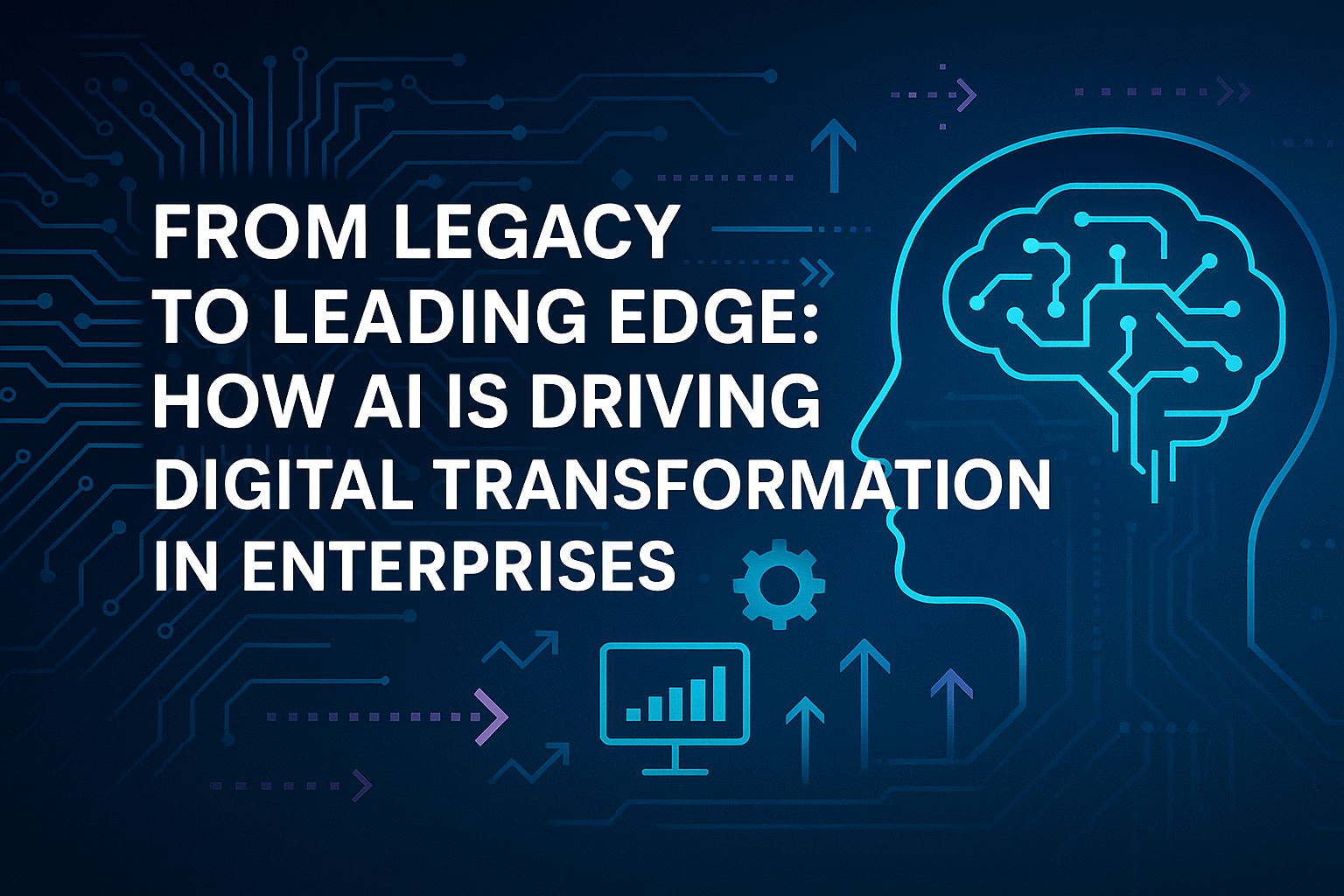
In the rapidly evolving digital landscape, artificial intelligence (AI) has emerged as a transformative force, redefining traditional business models and catalyzing innovation across industries. Enterprises are increasingly leveraging AI technologies to enhance operational efficiency, foster innovation, and maintain competitive advantage. This article explores how AI is propelling digital transformation, modernizing legacy systems, and shaping the future of enterprise operations.
The Evolution of Digital Transformation
Digital transformation refers to the integration of digital technologies into all areas of a business, fundamentally changing how it operates and delivers value to customers. Initially, this transformation focused on digitizing existing processes. However, the advent of AI has shifted the paradigm towards intelligent automation and data-driven decision-making, enabling businesses to reimagine their operations and customer engagements.

AI as a Catalyst for Modernizing Traditional Business Models
Automating Routine Tasks
AI technologies, such as machine learning and robotic process automation (RPA), are automating repetitive tasks, allowing employees to focus on strategic initiatives. For example, AI-powered chatbots handle customer inquiries efficiently, reducing response times and improving customer satisfaction. In the financial sector, AI algorithms automate loan processing and fraud detection, enhancing accuracy and speed.
Enhancing Decision-Making with Data Analytics
AI enables enterprises to analyze vast amounts of data to uncover insights and inform decision-making. Predictive analytics models forecast market trends, customer behaviors, and operational risks, allowing businesses to proactively adapt strategies. Retailers use AI to optimize inventory management by predicting demand patterns, thereby reducing waste and improving profitability.
Personalizing Customer Experiences
Personalization has become a key differentiator in customer engagement. AI analyzes customer data to deliver tailored experiences, from product recommendations to targeted marketing campaigns. E-commerce platforms utilize AI to suggest products based on browsing history and preferences, increasing conversion rates and customer loyalty.
Case Studies: AI-Driven Transformation in Enterprises
Commonwealth Bank of Australia (CBA)
Under CEO Matt Comyn, CBA has integrated AI into its operations, deploying over 2,000 models that process 157 billion data points daily. This integration has enhanced customer service through personalized experiences and streamlined operations by migrating data platforms to the cloud.
KPMG’s AI Investment
KPMG has invested $100 million to expand its AI capabilities in partnership with Google Cloud. This initiative has led to the development of AI solutions for fraud detection, loan processing, and healthcare diagnostics, demonstrating AI’s versatility across sectors.
Amazon’s Logistics Optimization
Amazon has incorporated AI into its logistics operations, deploying agentic AI-driven warehouse robots capable of multitasking, such as unloading trailers and retrieving parts. Additionally, generative AI is used to create advanced mapping tools for delivery drivers, enhancing efficiency and reducing emissions.
Challenges in AI-Driven Digital Transformation
Data Privacy and Security
The integration of AI raises concerns about data privacy and security. Enterprises must ensure compliance with regulations and implement robust cybersecurity measures to protect sensitive information.
Workforce Adaptation
As AI automates tasks, there is a need for workforce reskilling and upskilling to adapt to new roles that require human judgment and creativity. Organizations must invest in training programs to facilitate this transition.
Ethical Considerations
AI systems can inadvertently perpetuate biases present in training data, leading to unfair outcomes. Enterprises must implement ethical AI frameworks to ensure transparency, accountability, and fairness in AI applications.

Strategies for Successful AI Integration
Developing a Clear AI Strategy
Enterprises should define clear objectives for AI integration, aligning AI initiatives with business goals and customer needs. This involves identifying areas where AI can add value and setting measurable targets.
Investing in Scalable Infrastructure
Implementing AI requires scalable and flexible IT infrastructure. Cloud computing platforms offer the necessary resources to support AI workloads, enabling rapid deployment and scalability.
Fostering a Culture of Innovation
A culture that encourages experimentation and innovation is crucial for AI adoption. Leadership must support cross-functional collaboration and provide resources for pilot projects and continuous learning.
The Future of AI in Enterprise Transformation
AI’s role in digital transformation is poised to expand, with advancements in technologies like generative AI and agentic AI systems. These developments will further enhance automation capabilities, enabling enterprises to innovate and adapt in an increasingly dynamic market landscape.
Conclusion
AI is at the forefront of digital transformation, offering enterprises the tools to modernize operations, enhance efficiency, and drive innovation. By strategically integrating AI technologies, businesses can transition from legacy systems to agile, data-driven models that meet the evolving demands of the digital age. Embracing AI is not just a technological upgrade; it is a fundamental shift towards a more intelligent and responsive enterprise.



Comments (1)
A WordPress Commentersays:
June 4, 2025 at 3:30 pmHi, this is a comment.
To get started with moderating, editing, and deleting comments, please visit the Comments screen in the dashboard.
Commenter avatars come from Gravatar.